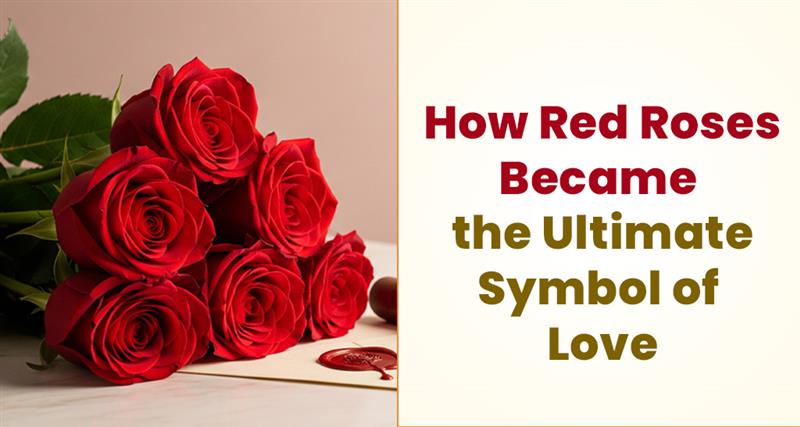
How the Red Rose Became the Universal Symbol of Love
Ever wondered why it’s always red roses on Valentine’s Day? It’s not just because “that’s what people do.” The significance of the red rose in romance stems from human behaviours—secrecy, desire, risk, and status—before it became a Valentine’s Day symbol. Long before the phrase “I love you” became common, the red rose didn’t initially symbolize love; it was associated with confidentiality, so much so that the term “sub rosa,” meaning under the rose, conveyed the message: “Keep this secret.Read further to know the rich history and meaning behind gifting roses on Valentine’s Day.
The Layers of Meaning Behind the Red Rose
The red rose has a history spanning over 5,000 years, originating in eastern Asia. Its popularity grew during the Roman era, where it was used in celebrations, perfumes, and medicine. The modern red rose became prominent in Europe in the late 18th century
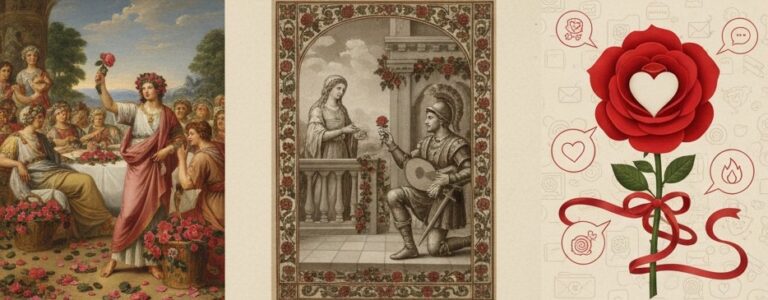
From Goddesses to Garden — Mythical Origins of Romance
- The red rose has important roots in ancient mythology, especially with Aphrodite (or Venus), the goddess of love and beauty. One story says the first red rose grew from the blood of her lover. This symbolizes passion, sacrifice, and everlasting love.
- Over centuries, this myth became embedded in culture — roses weren’t just pretty blooms, they became tokens of devotion and desire, carrying an emotional legacy across generations.
Roses in Ancient Rituals and Early Romance
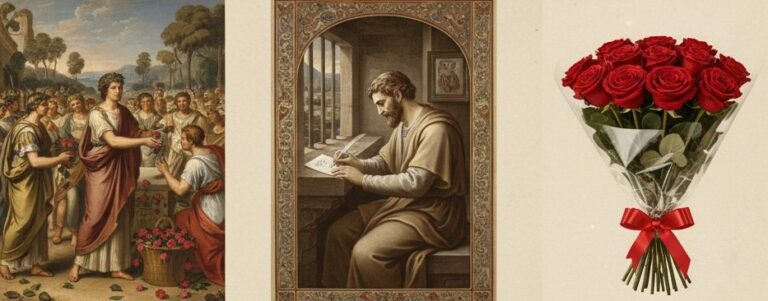
- In ancient Rome, roses appeared in religious rituals, feasts, and celebrations. Over time, they became a common symbol of love, longing, and courtship.
- As societies evolved, the rose’s symbolic value deepened — it was no longer just a decorative bloom, but a language of emotions.
How Roses Turned into the Love Flower of Valentine’s Day?
- The ancient Roman fertility festival Lupercalia celebrated love, fertility, and spring — and roses, with their association to love and beauty, naturally blended into such rituals.
- As Christianity spread, pagan rituals were replaced or repurposed. The celebration of Saint Valentine’s Day emerged. Over time, this day became associated with romantic love — partly due to earlier mythic and symbolic connections with roses.
The Role of Literature, Art & the “Language of Flowers”
- By the Middle Ages and later, poets, writers, and artists frequently used roses to express deep love and longing. Literature connected roses with romance, devotion, and beauty, making the rose emotionally loaded and culturally universal.
- In the 19th century, especially in Victorian England, the concept of “floriography” (the language of flowers) became popular. Each flower — and even its number — carried a distinct message. In this language of flowers, the red rose stood out as the emblem of passionate love, deep affection, and desire. Kate Greenway, author of The Language of Flowers, highlights how this tradition helped solidify the red rose as the ultimate romantic gesture, especially on Valentine’s Day, February 14.
The red rose earned its association with love through a rich history of myth, art, culture, and literature.
Psychology of Red and Its Emotional Impact on Humans
Red isn’t just a color we see but the colour we feel. It’s wired into the human brain to signal passion, intensity, and desire, which is why even a glimpse of something red can spark stronger emotional and physical reactions. When paired with symbols of love, that effect becomes even more powerful.
Their deep velvety color of red roses aligns instinctively with the emotions people associate with romance and closeness. Couples often use red rose petals to decorate romantic settings—such as hotel rooms, proposal setups, anniversaries, and date nights. They do it not just for the look, but because red naturally feels more intense than most colors. It signals warmth, closeness, and desire, so the whole space instantly feels more romantic and emotionally “charged.” To make the moment even more meaningful, many couples choose petals from popular rose varieties known for their rich color and classic romance feel.
The combination of emotional psychology and centuries of symbolic meaning gives red roses a unique power. They don’t just represent love — they activate it.
Why Red Roses Are Still Relevant, Even in Modern Times
From the Era of Poetry to the Era of Smartphones & Emotions
In the 20th century, Valentine’s Day evolved into a commercial event, and roses became a key symbol of it. Florists and advertisers leveraged the romantic connotation of roses to market them as the ideal gift for expressing love. Red roses, symbolizing passion and devotion, became the top choice for Valentine’s Day, and their popularity grew.
Today, people still give red roses. They represent strong emotions such as love, longing, devotion, apology, and desire, which have remained largely unchanged over time. While the way we express these feelings may vary, the emotions themselves stay the same.
Red roses are a universal symbol of love. Different cultures around the world recognize them. As love expressions evolve from handwritten notes to digital messages and online flower delivery, red roses remain a universal symbol of love, understood by everyone, regardless of language or culture.
TIME reports that more than 250 million roses are given around the world on February 14. This shows how widely the tradition has been commercialized, but it still holds strong emotional value.
Roses as Crisis Healers and Relationship Bridges
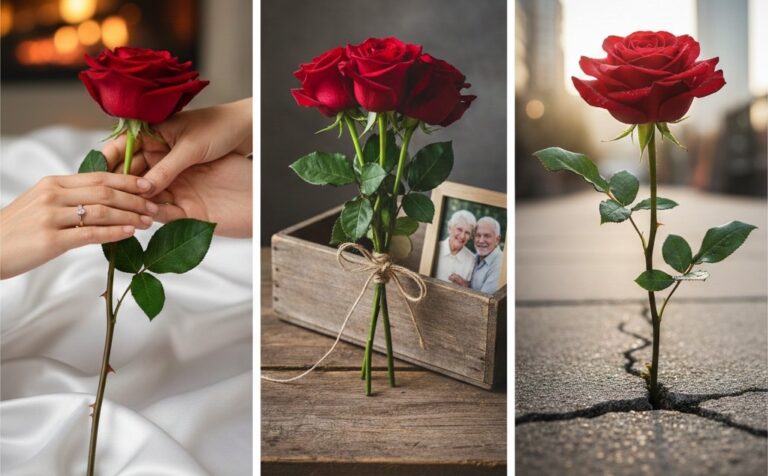
- In tough times like after an argument, during long-distance relationships, or when feeling emotionally distant—a red rose can be a simple way to ask for forgiveness and show hope for the future.
- Rose bouquets have special meanings, especially when it comes to a red rose, as it symbolizes sacrifice, passion, and longing. They can express complex feelings that words sometimes can’t.
Red Rose Meaning in Love vs. Relationship vs. Life
Red rose meaning in love
A red rose in love means strong romantic feelings and seriousness. It conveys, “This is not a causal relationship.”
Red rose meaning in a relationship
A red rose in a relationship often represents:
- commitment
- loyalty
- “I choose you—still.”
Red rose meaning in life
Red rose meaning in life can go beyond romance:
- courage (choosing someone, choosing yourself)
- respect (honouring someone’s presence)
- “You matter.”
Send Red Roses for this Valentine’s Day to Say I Love You
Love deserves a clear and romantic message, and nothing conveys this more effectively than red roses. Now that you understand the meaning of red roses in love and relationships, you can choose your gifts with intention. Even giving two red roses symbolizes a special connection.
We offer a wide selection of Valentine’s Day flower delivery options from classic red roses to mixed arrangements. Our blooms are hand-selected to convey your unique message. You can pair roses with a chocolate gift box or a teddy balloon combo for Valentine’s Day. Order now from Black Tulip Flowers Qatar for Valentine’s flowers, luxury rose bouquets with same-day delivery across Doha.
FAQs | Red Rose Symbol of Love
A single red rose symbolizes focus, devotion, and admiration. It often expresses messages like “You are the one” or “My love for you is unique.”
No other flower combines ancient mythology, cross-cultural symbolism, seductive color psychology, sensory appeal, and emotional versatility quite like the red rose.
Over the course of centuries, red roses have assumed a significant role as symbols of romantic love, stemming from a diverse array of ancient rituals, legendary love tales, poetic traditions, and even the intricate Victorian “language of flowers.” This transformation has led us to the rich customs we observe today on Valentine’s Day, where red roses play a central part in expressing our deepest affections.
Mostly yes — across many cultures, red roses signify love, passion, devotion. The deeper mythic and psychological roots help the symbol transcend language, nationality, and time.
It typically signifies commitment, loyalty, and sincere affection—especially when accompanied by a personal note.
Two red roses often stand for mutual love and partnership. They symbolize the energy of “us,” making them ideal for couples or for reconciliation.